Introduction
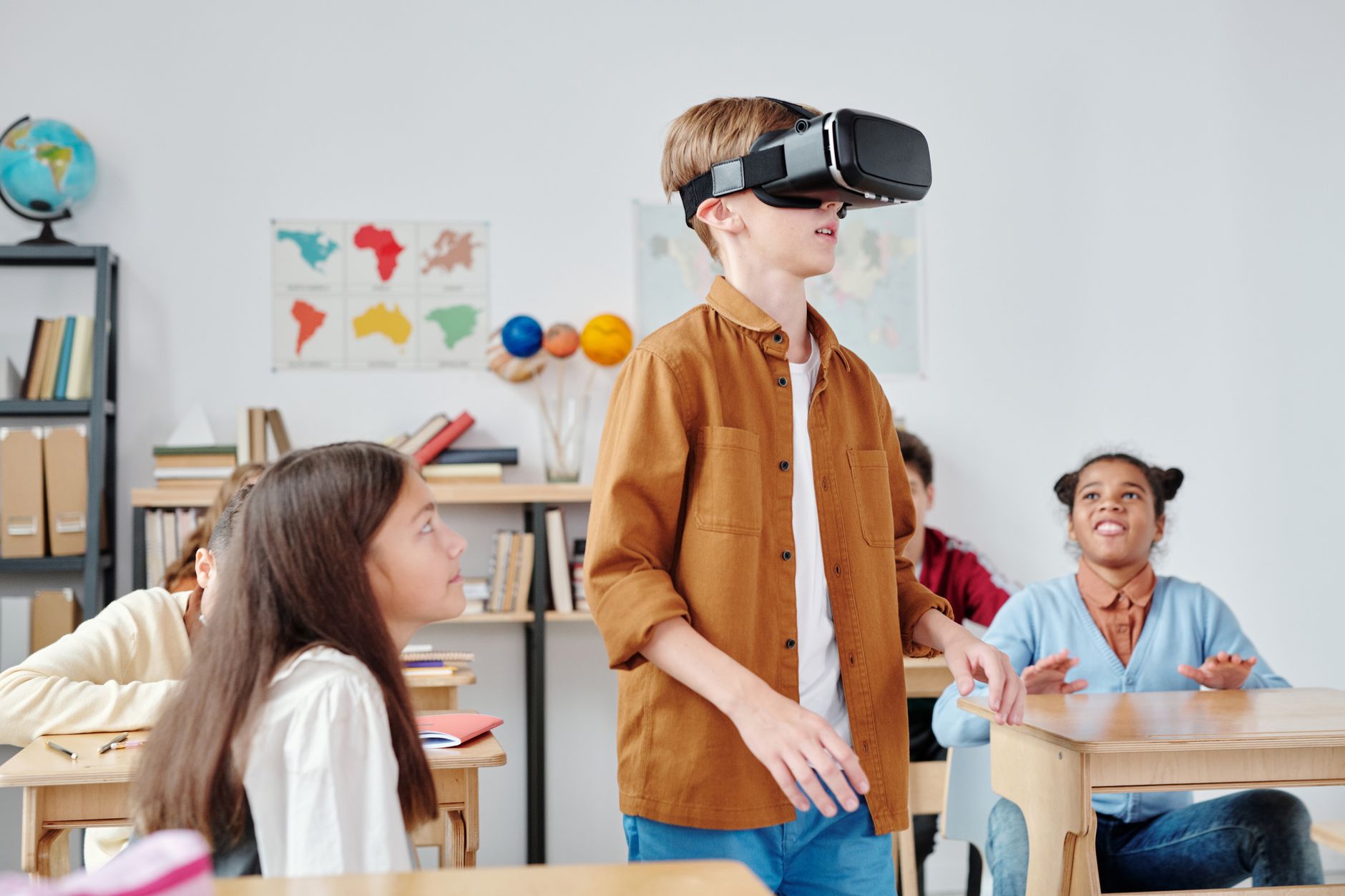
Immersive technologies like Augmented Reality (AR) and Virtual Reality (VR) are transforming education by creating interactive, engaging learning experiences. These technologies bridge the gap between abstract concepts and real-world applications, making learning more tangible and memorable.
Did you know? Immersive technology refers to technologies that create simulated experiences, making users feel like they are part of a digital or virtual environment. This can significantly enhance learning outcomes by providing hands-on experiences in a controlled, safe environment.
Applications in Education
Virtual Field Trips
VR enables students to explore historical sites, distant planets, or even the human body from their classrooms. Imagine walking through ancient Rome or diving into the ocean to study marine life—all without leaving the school.
Interactive Science Labs
AR can overlay digital information onto physical objects, allowing students to interact with 3D models of molecules, dissect virtual frogs, or explore the solar system in detail. This hands-on approach fosters deeper understanding and retention.
Language Learning
Immersive environments can simulate real-life conversations in different languages, providing students with practical experience and boosting their confidence in speaking and comprehension.
Challenges and Considerations
While immersive technologies offer numerous benefits, there are challenges to consider:
- Cost: High-quality AR/VR equipment can be expensive, though prices are decreasing.
- Training: Educators need training to effectively integrate these technologies into their curriculum.
- Content Development: Creating high-quality, educational AR/VR content requires time and expertise.
Future of Immersive Education
The future of immersive technology in education is bright. As technology advances, we can expect even more realistic and interactive learning experiences. The integration of AI with AR/VR could lead to personalized learning paths that adapt to each student's needs and learning style.
Moreover, the potential for remote collaboration through VR could bring students from different parts of the world together, fostering a global classroom environment where diverse perspectives enrich the learning experience.
Get Involved
Interested in exploring immersive technology further? Check out these resources:
Also, check out what others in the community are doing: